
Loading...


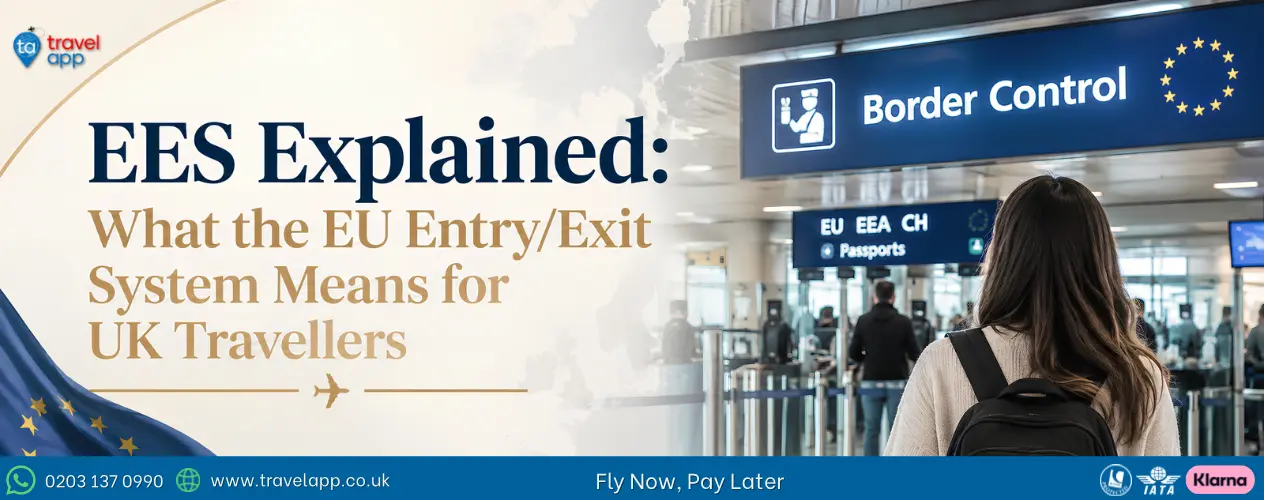
The EU Entry/Exit System (EES) is now fully in place across the Schengen area, and it changes how you cross the border on your next European holiday. Instead of a manual passport stamp, border staff record your fingerprints and a photo of your face the first time you travel under the new system.
This guide explains what EES is, how it works at the border, and what you need to do before you travel.
EES is a digital border system for the Schengen area. It replaces the manual passport stamp with an electronic record.
Every time you enter or leave the Schengen area, the system logs your passport details. It also records your fingerprints and a photo of your face on your first trip.
EES became fully operational on 10 April 2026, after launching in stages from 12 October 2025. It applies to UK passport holders and other non-EU travellers who do not need a visa for short stays.
The system tracks how long you stay in the Schengen area. This helps staff enforce the 90-day-in-180-day rule that already applies to UK travellers after Brexit.
EES adds a few extra minutes to your first crossing. After that, most crossings should be faster than the old stamp process.
On your first trip after EES started, you register at a kiosk or staffed booth. Staff scan your passport and take your fingerprints and a facial photo.
This first registration takes longer than a standard passport check. The data is stored securely and links to your passport for future trips.
Once you're registered, later trips should move faster. Kiosks scan your passport and match your face or fingerprints against your stored record.
You still queue and still pass through a checkpoint. But you skip the full registration step, because your biometric data is already on file.
EES applies to 29 Schengen area countries, according to GOV.UK EES Border Guidance. This includes major UK holiday destinations such as France, Spain, Greece, and Germany.
Ireland and Cyprus are EU members but are not part of the Schengen area, so EES does not apply there.
UK travellers using the Channel crossings face a slightly different setup. Dover, Eurostar at St Pancras, and Eurotunnel at Folkestone (Le Shuttle) all use juxtaposed border controls. This means French officers check your passport on UK soil, before you travel.
| Route | Border Check Location | Control Type |
| Dover to Calais (ferry) | Port of Dover | Juxtaposed (French checks in the UK) |
| Eurostar (St Pancras) | St Pancras International | Juxtaposed (French checks in the UK) |
| Eurotunnel (Le Shuttle) | Folkestone terminal | Juxtaposed (French checks in the UK) |
| Flights to Schengen airports | Destination airport | Standard (checks on arrival) |
As of September 2026, full biometric processing at these juxtaposed sites is still being rolled out. Some checks remain manual at busier times, because the system is not yet handling every crossing automatically.
Border queues have been a real concern since EES launched. According to BBC News, early enforcement led to long waits at some ports and airports as staff and travellers adjusted to the new process.
Most delays have eased as everyone grew more familiar with the kiosks. But busy routes and peak periods can still mean longer queues than before EES started.
A temporary flexibility period for full biometric enforcement ended on 6 September 2026. Shortly after, The Independent reported that nine Schengen countries had been allowed to ease strict biometric checks at busy border points.
These nine countries are France, Germany, Italy, Belgium, the Netherlands, Greece, Malta, Portugal, and Switzerland. Spain is not one of them, and continues full EES enforcement.
This flexibility is not a new EU-wide rule. It's an informal, unconfirmed adjustment at individual border points, driven by queues and technical problems. The European Commission has not formally authorised it, and there's no fixed date for when it might end.
If you're travelling to one of these nine countries this autumn, expect a mix of full and lighter checks, depending on the border point and how busy it is that day.
The EU introduced EES to modernise its external borders. Manual passport stamps made it hard to track exactly how long visitors had stayed.
EES gives border authorities an accurate, automatic record of entries and exits. This helps enforce short-stay limits and improves checks against lost or stolen passports.
EES stores your passport details, travel dates, and biometric data. This includes your facial photo and fingerprints, collected at your first registration.
Your data is stored under specific EU retention rules, which depend on the type of record and your circumstances. There is no separate charge to register for EES. It's a free system funded and run by the EU.
No, you cannot opt out of EES if you're travelling to the Schengen area. Registration is mandatory for UK passport holders making short visits without a visa.
If you refuse to provide your fingerprints or photo where required, border staff can refuse you entry. EES is a condition of crossing the border, not an optional extra.
Yes, children are included in EES, though the rules differ slightly by age. Children under 12 are exempt from giving fingerprints.
However, this exemption only covers fingerprints. All children, including those under 12, still need a facial photo taken at the border.
Parents or guardians should keep children's passports up to date and be ready for a short facial scan at the kiosk or booth, even for very young children.
Yes, you can pre-register some details using the official "Travel to Europe" app. It lets you enter your passport details and questionnaire answers, and submit a facial photo, before you travel.
Pre-registering does not remove the need to visit a kiosk or booth. Fingerprints can only be captured in person, so first-time registrants still complete that step at the border. The app simply aims to shorten the time you spend at the kiosk.
Check that your passport is valid for your travel dates and meets Schengen entry rules. If your passport is approaching expiry, allow plenty of time for UK passport renewal before your departure.
It is also worth checking your documents before travelling, particularly if you have not travelled internationally recently. Details such as passport validity, names and required supporting documents can cause problems at the border, so checking common UK travel document mistakes to avoid can help you spot issues early.
Consider pre-registering your details using the Travel to Europe app if it's available for your route. Pack any documents you might need and check the documents needed to travel abroad before you leave.
Keep an eye on travel advice close to your departure date, since arrangements at individual crossing points can change at short notice.
EES and ETIAS are two different systems, though people often confuse them. EES is a border check system that records your entries and exits using biometric data.
ETIAS is a separate travel authorisation, similar to the US ESTA. It's a pre-travel approval you apply for online, not a border check.
As of September 2026, ETIAS has no confirmed launch date. The EU has said it expects the system to start in the last quarter of 2026. When it does launch, the planned fee is €20 for adults aged 18 to 70, with under-18s and over-70s exempt from the fee.
Travellers should check the latest ETIAS visa requirements before applying.
UK citizens generally do not need a Schengen visa for short visits under the visa-free rules, although requirements can vary depending on the circumstances. The Schengen visa requirements for UK citizens explain when different rules may apply.
Quick answers to common questions. Reach out if you need more help.
EES is a digital border system that records your entries and exits from the Schengen area. It replaces manual passport stamps with an electronic record, facial images and fingerprints where required.
Yes, UK passport holders must register when required the first time they cross an external Schengen border under EES. This applies to short visits without a visa.
No, EES does not apply to Ireland or Cyprus, because neither is part of the Schengen area.
EES data is retained under specific EU rules rather than a single three-year period for every record. The exact retention period depends on the type of record and the circumstances of the traveller.
No, EES registration is free. There's no separate charge for the fingerprint and facial image checks at the border.
No, children under 12 are exempt from giving fingerprints. They still need a facial image recorded at the border.
No, the app cannot replace your in-person check. It lets you submit some details in advance, but required biometric checks must still be completed at the border.
EES is a border check system, while ETIAS is a separate online travel authorisation. EES is already running, but ETIAS applications are not yet open as of September 2026.